


Why Standalone Systems Are Driving College Credit Standardization
Systemwide alignment often stalls on IT timelines. Here’s how standalone systems help colleges standardize early credit workflows now—without waiting for full integration.
Most system offices agree on the goal.
Standardizing early credit and applicable workforce knowledge system wide can't wait any longer. Aligned policies across colleges and creating consistency for students and partners is overdue.
But getting there is harder than it sounds.
Not because the strategy is unclear, but because execution depends on systems that aren’t always ready.
Where Alignment Slows Down
Systemwide coordination often runs into the same constraint:
Technology timelines.
IT teams are balancing multiple priorities. Integrations require planning, security review, and resourcing. And system-level changes take time to implement across colleges.
None of this is wrong.
But it creates a gap between what institutions want to standardize and what they can operationalize today.
The Risk of Waiting
While alignment plans are in progress, articulation and early credit workflows don’t pause.
Colleges continue managing:
- Course approvals
- Partner agreements
- Student credit intake
- Cross-college and partner coordination
Often through a mix of emails, PDFs, and local processes.
The longer this continues, the harder it becomes to standardize later.
Because each college builds its own version of “how things work.”
Why Standalone Systems Matter
This is where standalone systems come in.
Not as a replacement for long-term IT strategy, but as a way to move forward now.
A standalone approach allows institutions to:
- Centralize articulation and credit workflows immediately
- Create consistency across colleges without waiting for full integration
- Give staff and faculty a shared system for approvals and records
- Support students with clearer, faster credit decisions
And importantly:
It does this without requiring immediate changes to existing SIS or IT infrastructure.
What This Looks Like in Practice
Most institutions don’t start with full system integrations. They start by stabilizing the workflow.
In higher education, colleges rolling out dual enrollment or CPL processes often begin with a standalone system to centralize requests, approvals, and tracking before touching the SIS.
This mirrors what we’ve seen in other sectors. Nonprofits, for example, rarely begin with fully integrated donor management systems. They adopt standalone tools first to standardize intake, reporting, and communication, proving the process works before layering in complexity. The same pattern shows up in healthcare and workforce programs: stabilize the workflow first, then integrate.
The result is faster implementation, less strain on IT, and immediate operational clarity. Instead of waiting months or years for a perfect integration, teams gain visibility, reduce manual work, and create a system of record that can later connect into existing infrastructure when the timing is right.
Want to go deeper?
If you're thinking about taking this approach, the real challenge isn’t the technology. It’s preparation and alignment.
We put together a practical guide on how to implement a standalone system effectively and get IT on board without friction. It walks through how to position the rollout, reduce internal resistance, and set your team up for a smooth transition.
If you’d like a step-by-step breakdown, click here to access the readiness checklist, and if it makes sense let's work on your project presentation together.
Why This Matters Now
During district coordination and planning cycles, system offices are setting direction for the year ahead.
The question isn’t just:
What should we standardize?
It’s also:
How quickly can we start?
Waiting for full system alignment often delays progress. Starting with a standalone workflow allows institutions to begin now, and evolve over time.
Systemwide standardization doesn’t happen all at once. It’s built step by step. For many institutions, the shift is this:
From waiting for the perfect system to using a system that works today and building alignment from there.
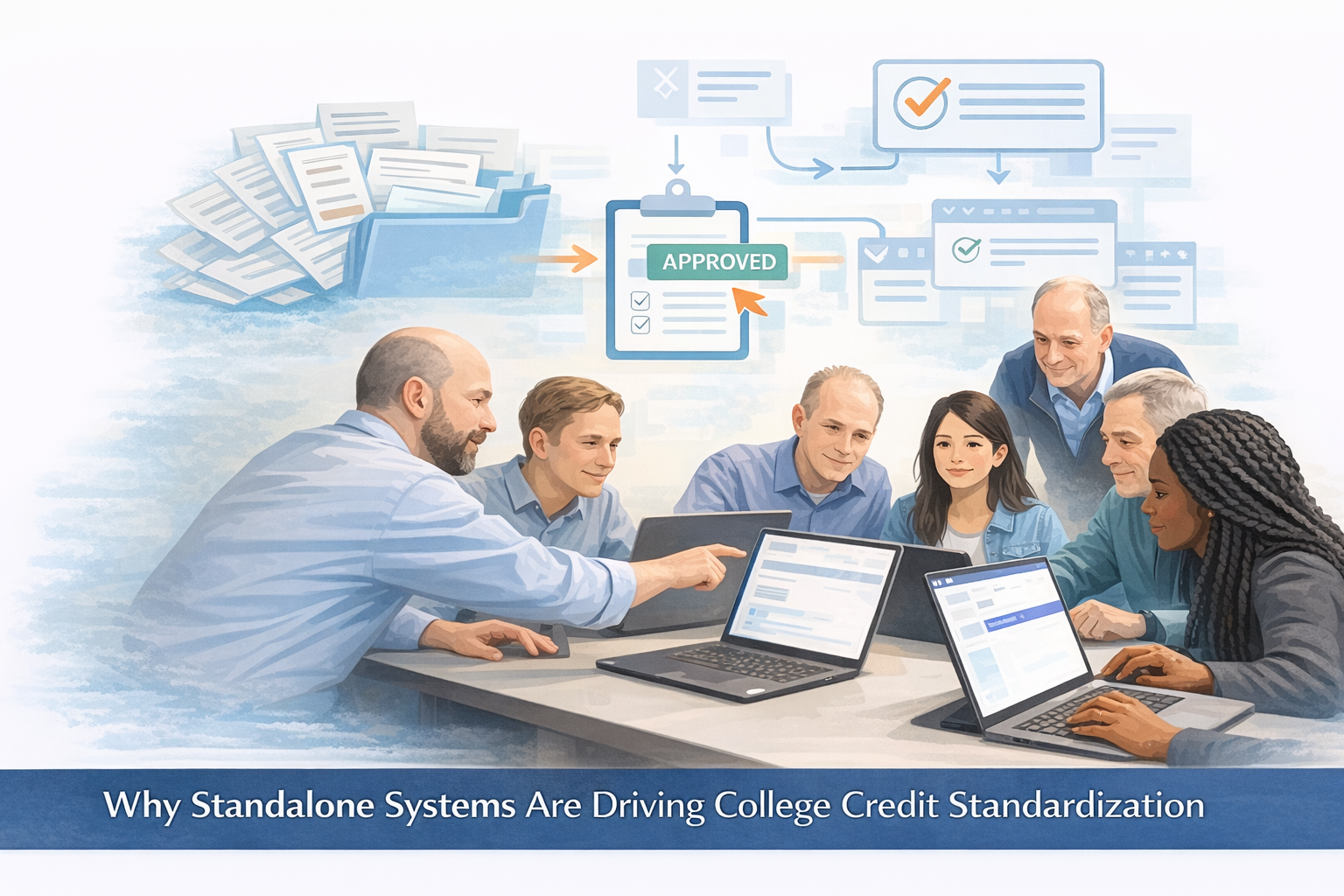

Unlocking opportunities for students and simplifying credit workflows — one clear, achievable step toward student success.